The most neglected leg muscle
August 7, 2026
When most people think of training legs, they tend to think of 4 different muscle groups:
Glutes
Quadriceps
Hamstrings
Calves
There is another muscle group, though, that is of at least equal importance to train; whether your goals are performance, longevity, physique oriented.
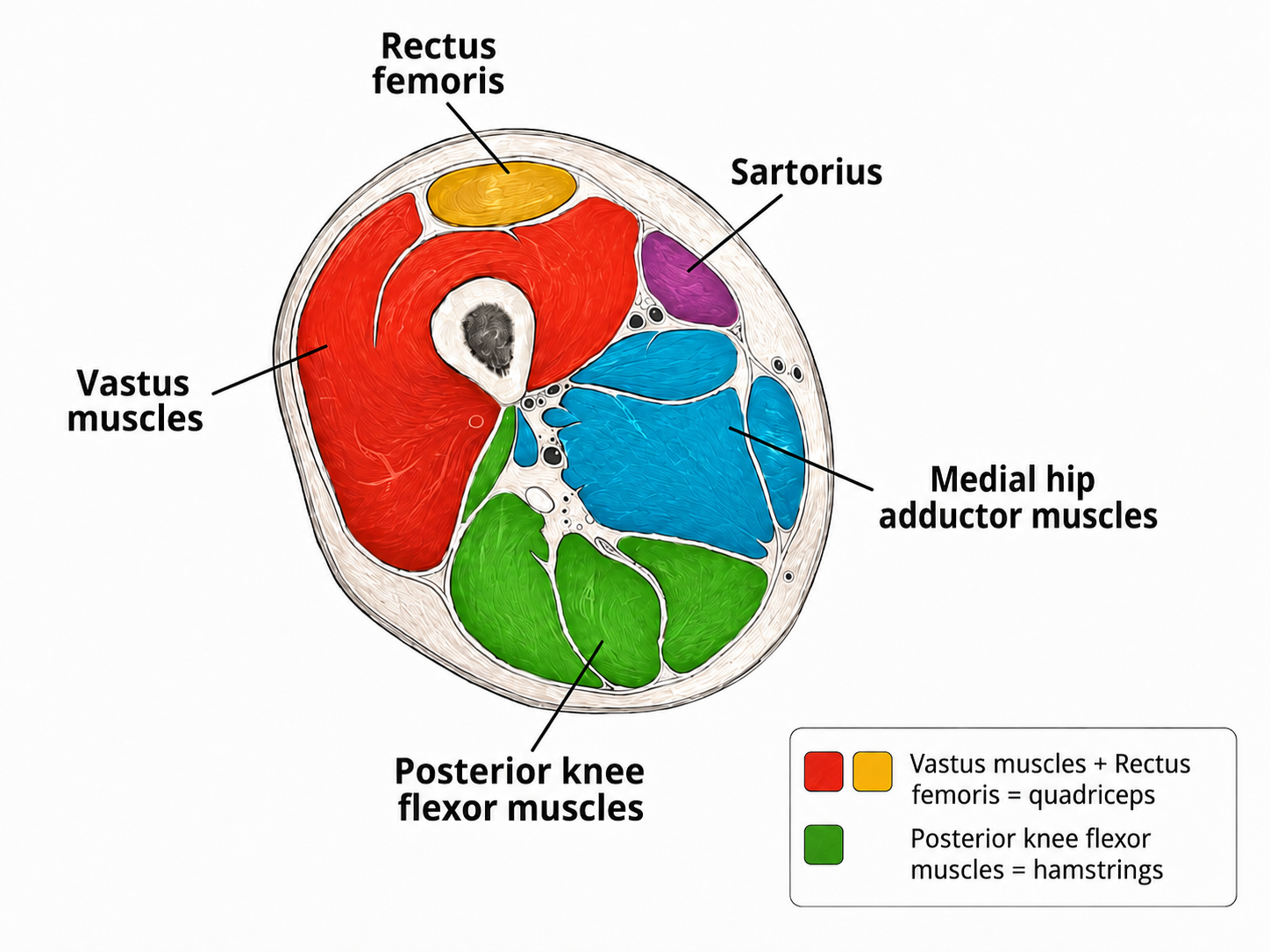
Your adductors are the muscles on the inside of your thigh.
There are four of them that fit in this category:
Adductor magnus
Adductor longus
Adductor brevis
Gracilis
Their primary role is adduction (shocker) which is the act of bringing your thighs closer together toward the midline. Moreover, as your thighs get farther apart and away from the midline, these muscles become more stretched.
Each one begins and ends at slightly different parts of the thigh. As a result, they provide notable contributions to other movements such as squats and deadlifts.
This group of muscles is important to train for a few reasons.
First, as I said they already are contributing to the movements you may already be doing.
The key consideration is that they don’t get as robust of a stimulus from squats and deadlifts as your glutes, quadriceps, and hamstrings do.
So, they may not develop at quite the same rate if they’re not given any direct training.
Second, as you can see in the image, they usually make up ~1/3 of the overall muscle mass in a person’s thigh.
If improving your physique makes up any portion of your training goals, then there is an obvious implication here.
Third, one of the adductor muscles (the adductor longus) receives very little, if any, training stimulus from most squat and deadlift variations.
As a result, this is the most commonly injured muscle whenever someone experiences a strain in this area. [2]
So, the bottom line is that it’s worthwhile to spend some time directly targeting your adductors.
The question is: what is the best way to do so?
Collings et al. recently published a study comparing the muscle activation 8 different exercises. [1]
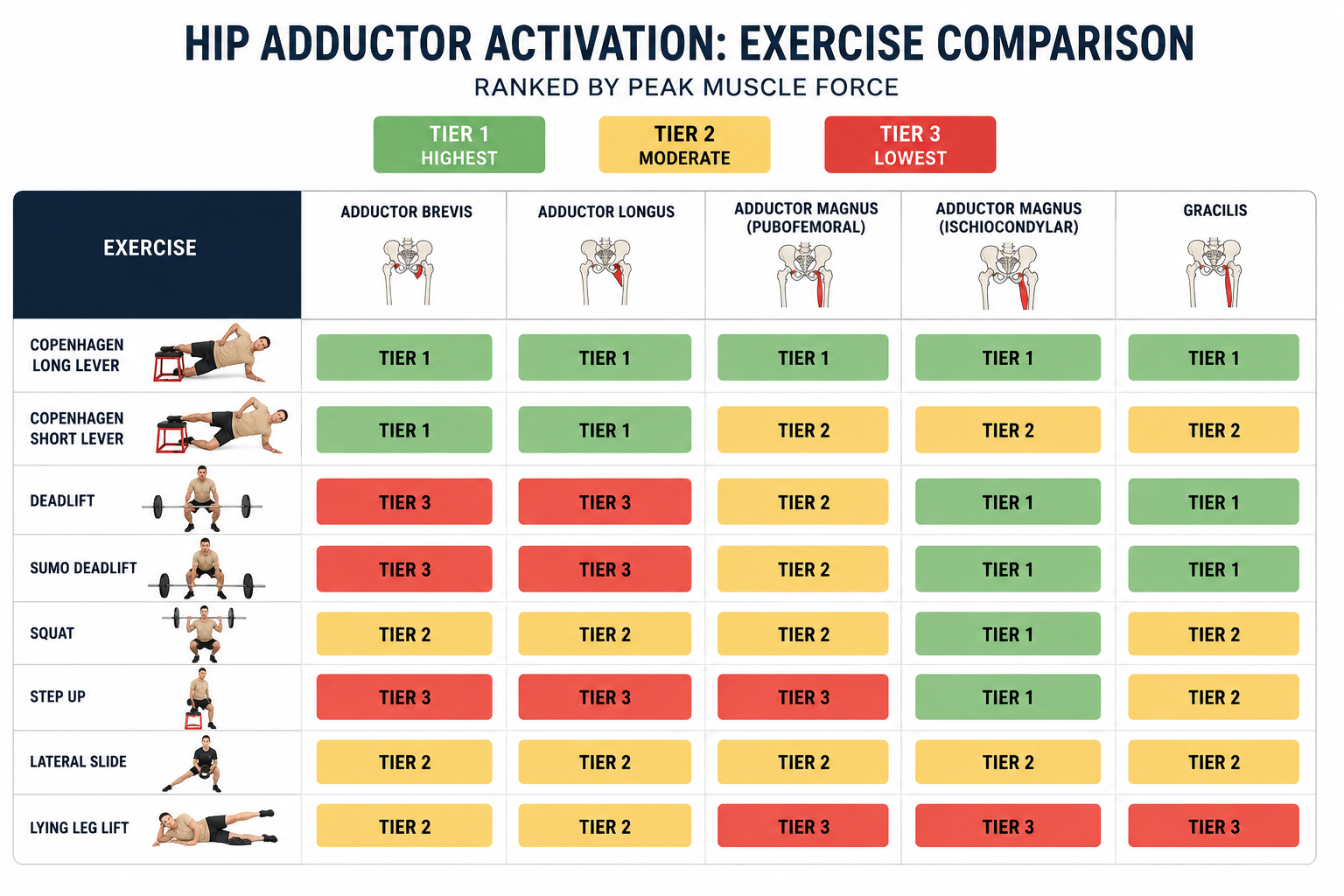
The relevant findings are as follows:
As I said, while the adductors are active during squats and deadlifts, they aren’t receiving a truly robust stimulus
Copenhagen planks, among the exercises tested here, activated all of the adductor muscles the most
That said, Copenhagen planks are a pretty intense exercise. Even if you’re well-trained otherwise, I wouldn’t recommend jumping straight into them.
Adductor progression sequence
First are foremost, adductor training using a seated hip adductor machine was not tested in this paper.
I would be shocked if that movement didn’t produce the same degree of adductor muscle activation as Copenhagen planks.
Using this machine, starting at a tolerable weight, and progressing as normal is a fine enough plan in my view.
Even if you have access to an adduction machine, it can be helpful to train a body part with different movements over time.
So, that said, before jumping straight into Copenhagen planks, consider starting with the progression sequence below:
Spend ~4-6 weeks working on each movement before moving onto the next one, progressing in either reps or duration as you go.
Enjoyed this issue?
Subscribe to get every issue →